Back to Projects
Dogtor AI Learning Assistant

Dogtor AI Learning Assistant

2025 - PresentLive · Continuously improving#1 Education · App Store & Google PlayHCI research in progress

Why this project exists

The problem

After years of teaching, I saw that many students wanted to learn but struggled to keep a rhythm when studying felt repetitive and feedback came too late.

The product idea

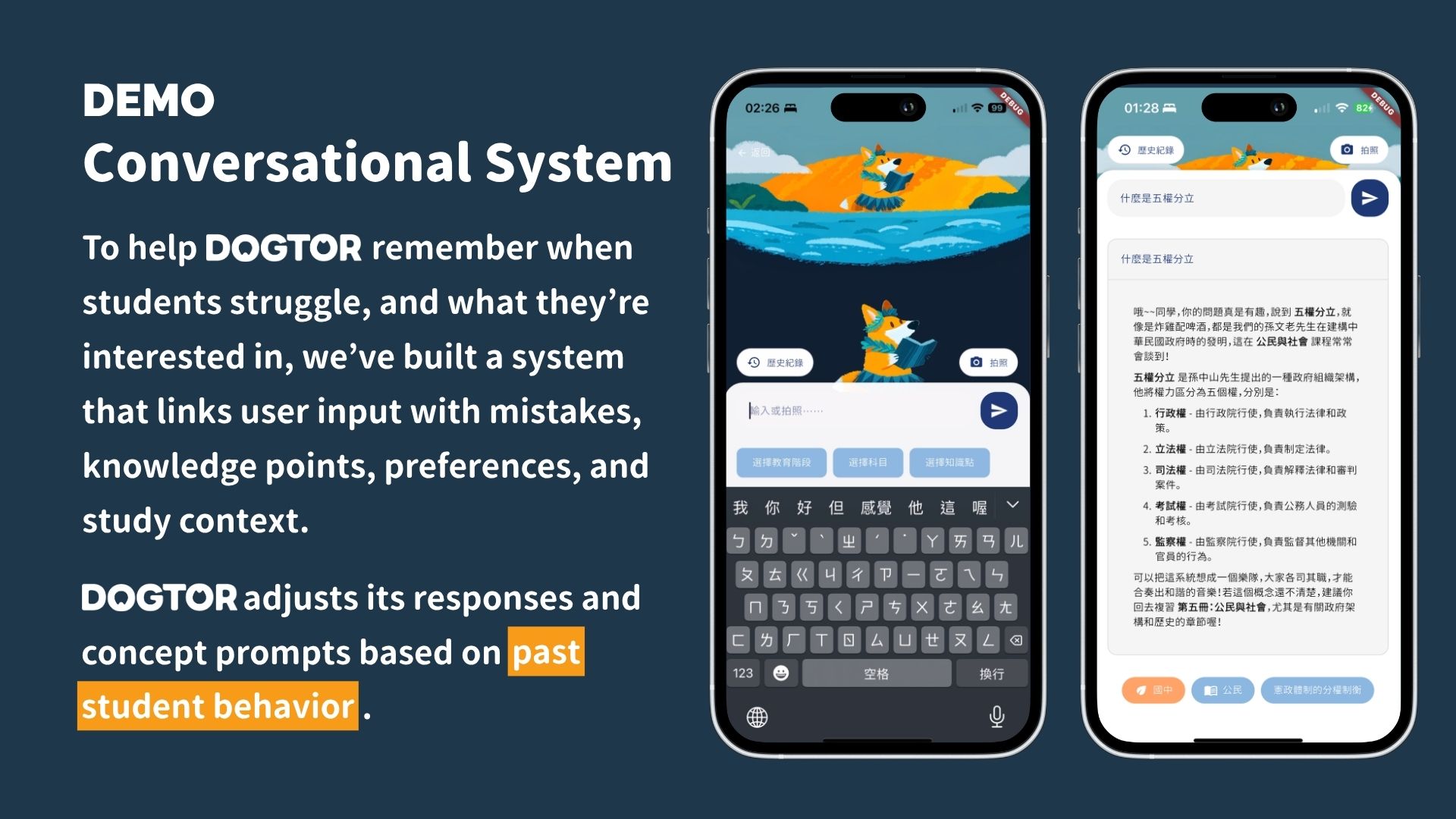
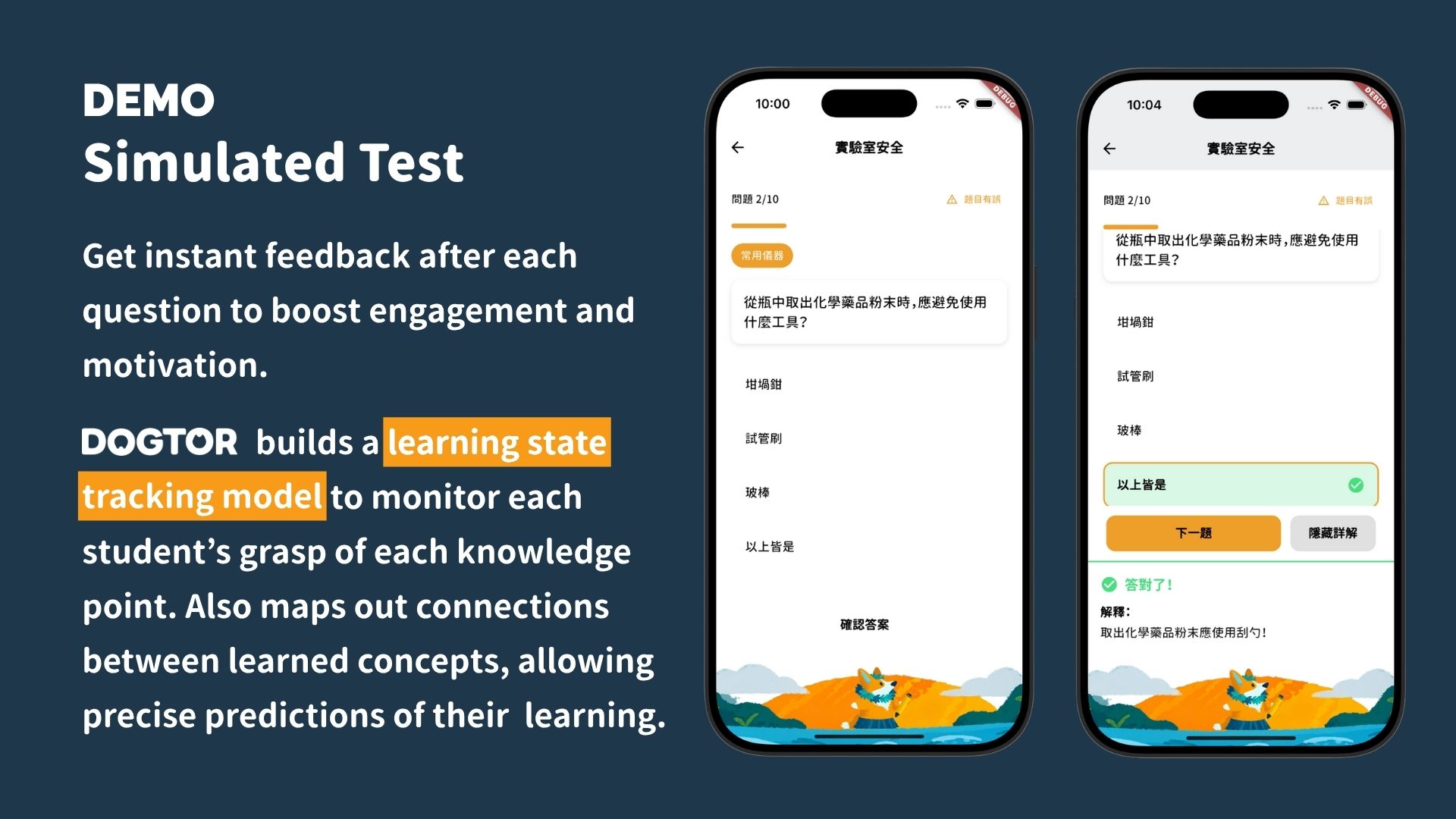
I wanted an AI learning companion for short, interactive practice. Question feedback and knowledge-point records help students keep going and make their weak areas visible to them and their parents.

OVERVIEW

Project Overview

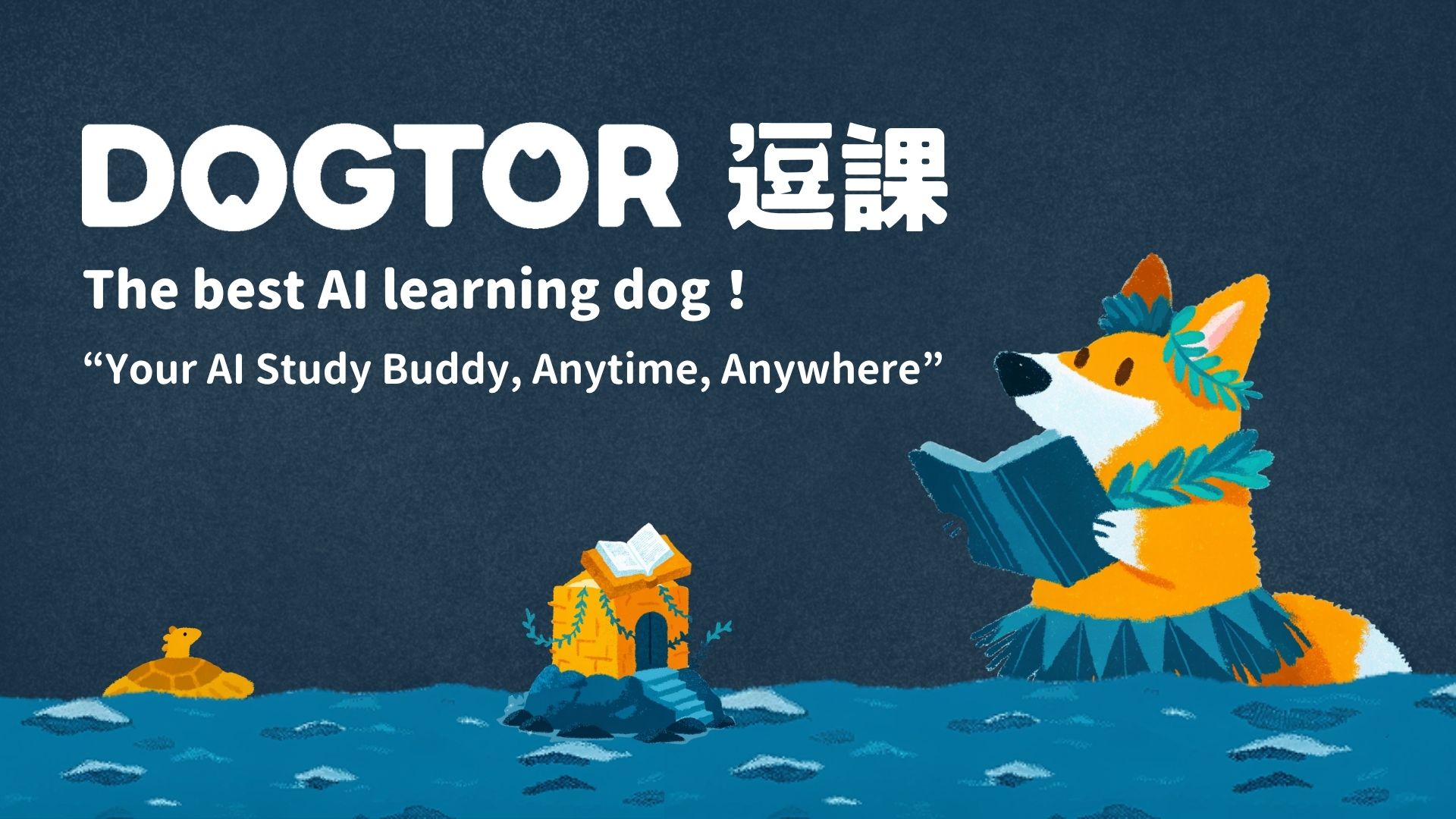
Dogtor (逗課) is an AI learning app for secondary-school students. It combines question practice, error tracking, learning progress, and personalized guidance. On October 26, 2026, it reached #1 in Education on both the App Store and Google Play, and it now has 18,000+ users. In its first month after launch, it reached 2,600 monthly active users.

As a co-founder and software engineer, I proposed the overall system architecture, connecting knowledge-graph-based learning scores, AI question generation and multi-model checks, personalized review, and parent analytics. Multi-model checking covers nearly all Taiwanese junior and senior high school subjects and international curricula including SAT and AP. Personalized review is live. I also work on the production backend and data systems, including LLM orchestration, event collection, FastAPI APIs, Cloud Run and Cloud SQL.

I also built paid parent analytics that turns student answers, incorrect choices, and knowledge-point performance into AI-generated weakness analyses and personalized guidance.

The team is also conducting human–computer interaction (HCI) research related to Dogtor; the study is still in progress.

WATCH IT IN ACTION

Video Showcase

DESIGN & DECISIONS

Key Features & Design

Problems, approaches & trade-offs

AI question banks with cross-model checks across curricula

I proposed the question-generation and checking architecture, covering nearly all Taiwanese junior and senior high school subjects and international curricula including SAT and AP.

Why it matters

Curricula differ in scope, question formats and language requirements. Generating questions at scale also requires checking content and answers.

Design considerations

Organize generation by curriculum, chapter and knowledge point, adapt requirements by subject, and cross-check with multiple models. Extend the architecture across Taiwanese and international curricula to support different learning content.
Learning insights parents can act on

Turn answers, incorrect choices and knowledge-point performance into parent reports with AI weakness analysis and guidance.

Why it matters

Answer records need concrete concepts and next steps to help parents understand their child’s learning.

Design considerations

Group related mistakes by knowledge point, give the AI the full mistake distribution, ground suggestions in actual concepts, and retain fallback content when generation fails.

Connect learning scores and personalized review through a knowledge graph

Personalized review is live, using a knowledge graph to calculate knowledge scores and combining learning records with review timing to recommend next steps.

Why it matters

Scores alone leave students to decide what to practice. Recommendations need specific concepts and review timing.

Design considerations

I proposed a knowledge-graph-based learning architecture that connects answer records to knowledge scores, then prioritizes review using knowledge-point performance and time since practice, linking analytics back to practice.

THE USER JOURNEY

How it works

  1. Practice questions

  2. Get feedback and explanations

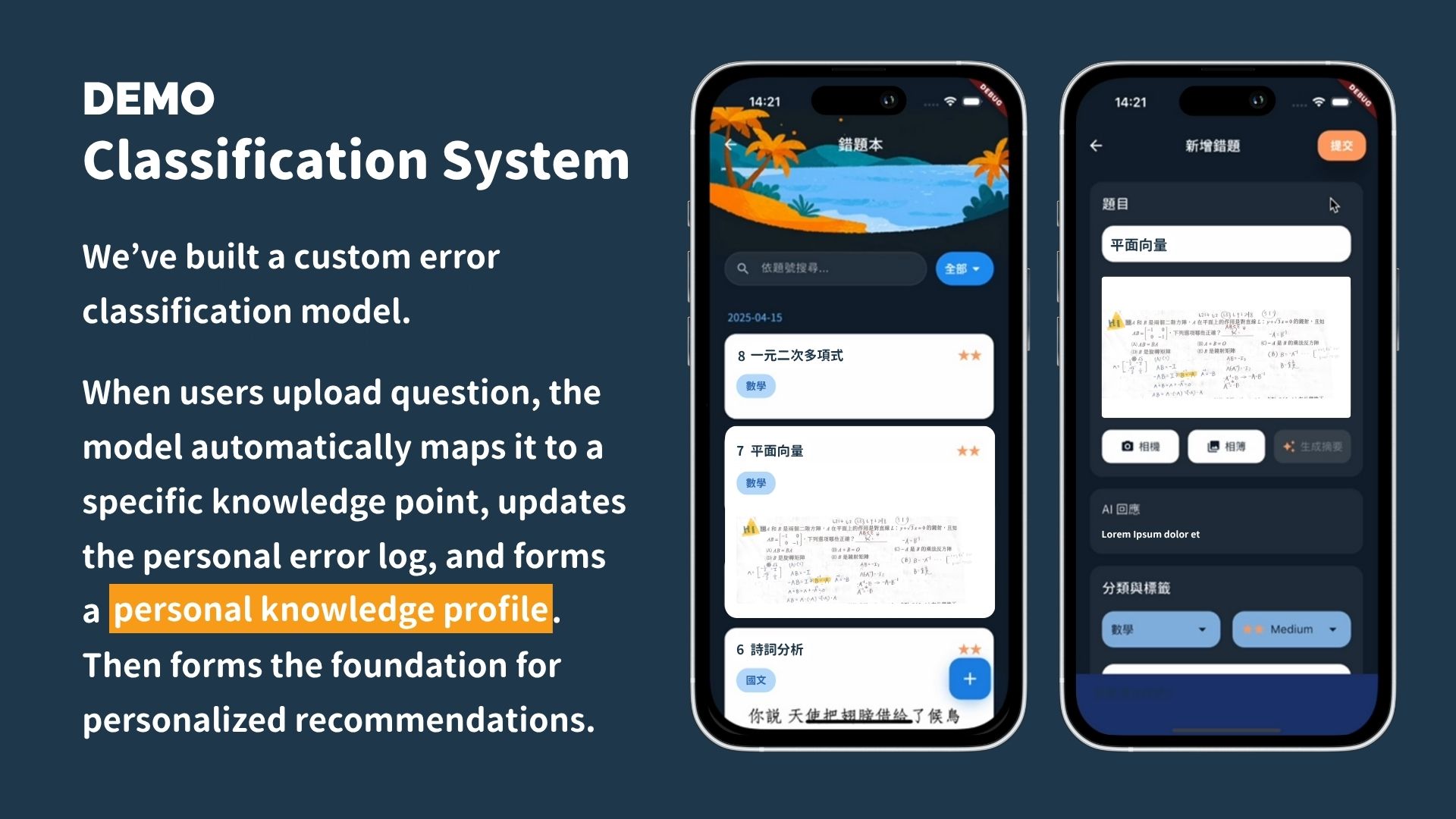
  3. Track mistakes by knowledge point

  4. Practice weaker areas

  5. Review progress and parent insights

BUILT WITH

Technologies Used

FlutterFastAPIMySQLGCP Cloud RunCloud SQL

EXPERIENCE & OUTCOMES

Project Milestones

Proposed the Overall Learning Architecture

Achievement

Proposed the architecture connecting knowledge graphs, cross-curriculum AI question checking, personalized review and parent analytics.

Cloud Infrastructure

Skill

Deployed scalable backend and database on Google Cloud Run and Cloud SQL.

Built RESTful APIs with FastAPI

Learning

Developed efficient, well-documented APIs with FastAPI, enabling seamless communication between frontend and backend.

Database Design & Analytics

Skill

Designed MySQL schema for learning progress tracking, enabling error analysis and personalized learning paths.

#1 in Education on both the App Store and Google Play

Achievement

Reached #1 in Education on both the App Store and Google Play on October 26, 2026; Dogtor now has 18,000+ users.

<Pierre />

Full-stack developer building mobile apps, web platforms, and AI learning tools from idea to release.

Contact Info

  • b12705058@g.ntu.edu.tw
  • +886 963 779 263

© 2026 Pierre Chen. All rights reserved

Build v2.0.0 • Optimized for innovation